
waterproof walking shoes
Best Waterproof Walking Shoes in the UK: What to Check Before You Buy
A practical guide to choosing waterproof walking shoes for rain, wet grass, towpaths, and muddy UK paths.
Published 7 June 2026 Updated 7 June 2026
By Ty
Ty's field notes
Read it like a fitting-room note.
Start with the walk. Then look for the thing that could still make the shoe wrong.
- Walk
- waterproof walking shoes
- Watch
- Can run warm and may dry slowly once water gets inside.
- Basis
- Research-based. No hands-on testing claimed.
- Product links checked 7 June 2026.
Choose the next condition
Do not stop at one guide if the walk has another problem.
A shoe can pass one check and fail the next. Use this map to keep narrowing before you open a product page.
Wide fit walking shoes Wet path Rain, grass, and puddles Check waterproofing against breathability, grip, and collar height before trusting the word waterproof.  Rougher routes When a boot starts to make sense Mud, cold, rough ground, and ankle coverage can matter more than a lighter low shoe.
  Daily miles Pavements, parks, and errands For ordinary walks, comfort, outsole wear, and fit checks beat the most technical spec sheet.
  Fit check Toe room without heel slip Use width, lacing, socks, and returns as part of the decision, not as afterthoughts.
 Waterproof walking shoes are useful when the walk is wet but not serious enough for a boot.
They suit muddy parks, damp pavements, canal paths, wet fields, dog walks, and light trails.
The mistake is buying them as if waterproofing is the only feature that matters.
It is not.
Start with the walk, not the membrane
A waterproof membrane helps with rain, wet grass, and shallow splashes.
It does not make a low-cut shoe behave like a welly.
If water runs over the collar, your sock gets wet from the top.
If the walk is rough, steep, or cold, a boot may be the better compromise.
What good waterproof walking shoes need
Look for a secure heel, enough toe room, a sole that grips wet surfaces, and a return policy that gives you time to check fit indoors.
The outsole matters because waterproof uppers do not help much if the sole feels nervous on wet stone.
The fit matters because waterproof shoes can feel stiffer than mesh shoes.
Breathability is the tradeoff
Waterproof shoes usually breathe less well than airy non-waterproof shoes.
That does not make them bad.
It just means they are better for damp, cool conditions than hot summer pavement walks.
If your feet run warm, think carefully before choosing the most sealed option.
How to choose between shoes and boots
Choose shoes when the walk is mixed, the path is moderate, and you want lighter footwear.
Choose boots when you need ankle coverage, deeper grip, more protection, or better warmth.
There is no universal winner.
The best choice is the one that matches the worst part of your usual walk.
Final buying checks
Check the retailer’s return policy before wearing shoes outside.
Try them indoors with the socks you normally use.
Leave a little toe room for downhill sections.
Read recent reviews for sizing patterns, waterproofing complaints, and outsole grip in wet weather.
Product shortlist
These are research slots to check against fit, returns, price, and current availability before buying.

Research slot
Waterproof walking boot shortlist
Best for: Muddy paths, colder wet days, and walks where ankle coverage matters.
Use this slot for lightweight waterproof walking boots with reliable grip, enough toe room, and a sensible break-in period.
- Mid-cut upper
- Waterproof membrane
- Deeper lugs
Good fit when
- More coverage than shoes
- Better for mud and uneven paths
- Useful in colder wet weather
Check first
- Heavier than shoes
- May need break-in time
- Can be too warm for dry pavement
Research slot based on buyer criteria only. No hands-on testing is claimed.
Product/link check: 7 June 2026
Replace with direct approved merchant links after product checks.
Check current price and availability with the retailer.
Check current price and availability with the retailer.
Research slot
Waterproof trail walking shoe shortlist
Best for: Wet grass, towpaths, rainy commutes, and light trail paths.
Use this slot for low-cut waterproof walking shoes with a membrane, secure heel hold, and outsole grip that makes sense on wet paths.
- Waterproof membrane
- Trail-style outsole
- Low-cut upper
Good fit when
- Useful in rain and wet grass
- Lighter than boots
- Good for mixed pavement and path use
Check first
- Usually warmer than mesh shoes
- Water can still enter from the collar
- Needs current waterproofing complaints checked
Research slot based on buyer criteria only. No hands-on testing is claimed.
Product/link check: 7 June 2026
Replace the search URL with direct approved affiliate links after account approval.
Check current price and availability with the retailer.
Check current price and availability with the retailer.
Quick comparison
| Pick | Best for | What to check | Caveat | Link |
|---|---|---|---|---|
| Waterproof trail walking shoe | Low-cut walks on wet grass, towpaths, and mild trail paths | Waterproof membrane, grippy outsole, secure heel | Can run warm and may dry slowly once water gets inside. | View |
| Waterproof walking boot | Rougher paths, ankle coverage, and colder wet days | ankle support, deeper lugs, break-in time | Heavier than shoes and less comfortable for some everyday walks. | View |
Pros
- Useful for rain and wet grass
- Often lighter than boots
- Good for mixed pavement and path use
Cons
- Less breathable than mesh shoes
- Can dry slowly
- Water can still enter from the top
FAQs
Are waterproof walking shoes always better?
No. Waterproof shoes help in rain and wet grass, but they can feel warmer and may dry slowly if water enters over the cuff.
Do waterproof shoes stop all water?
They protect against normal rain and splashes, but deep puddles, water over the collar, worn membranes, and poor care can still leave your feet wet.
Sources and further reading
Keep choosing from here
A good shoe choice usually comes from one more check.
If this guide feels close but not exact, use these next pages to narrow the fit, weather, support, and walking surface before you buy.
Related reading
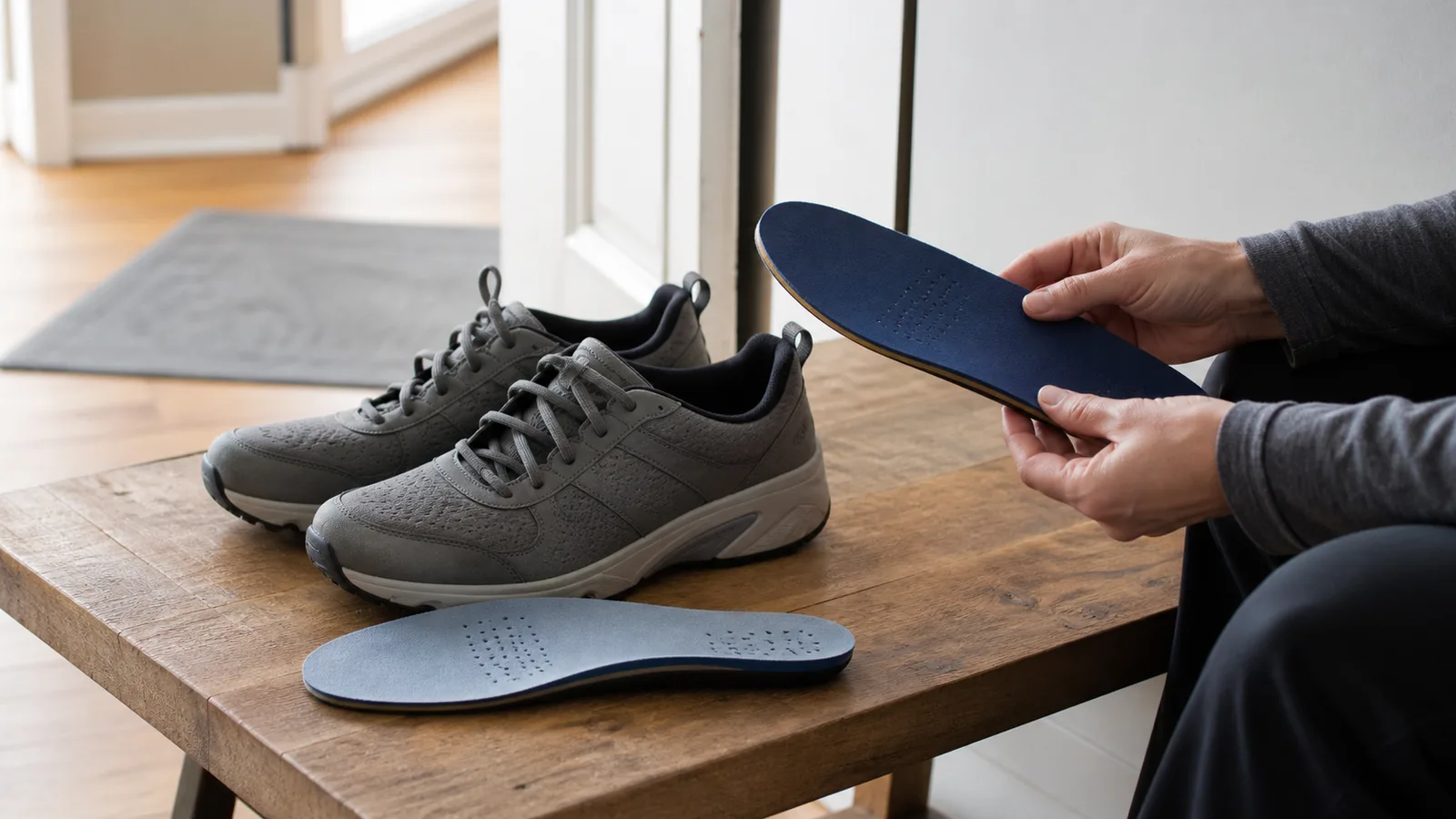
shoe care and accessories
Best Insoles for Walking Shoes: Buyer Criteria That Keep Fit First
Insoles can help tune the feel of a walking shoe, but they can also make a good fit worse. Start with shoe volume, support feel, and returns.
Updated 8 June 2026
walking boots
Best Walking Boots for UK Walks: Grip, Waterproofing, and Break-In
A grounded guide to choosing walking boots for wet fields, muddy paths, colder days, and rougher UK walks.
Updated 8 June 2026
walking shoes for flat feet
Best Walking Shoes for Flat Feet: Support Criteria Without Medical Promises
For flat feet, the useful question is not magic arch support. It is whether the shoe feels stable, fits properly, and leaves room for the support you need.
Updated 8 June 2026
Walking shoe deals, when they are worth noticing
A future Woo Walkers newsletter will cover seasonal offers, content refreshes, and buyer checklists. Signup wiring is left off until a provider is chosen.